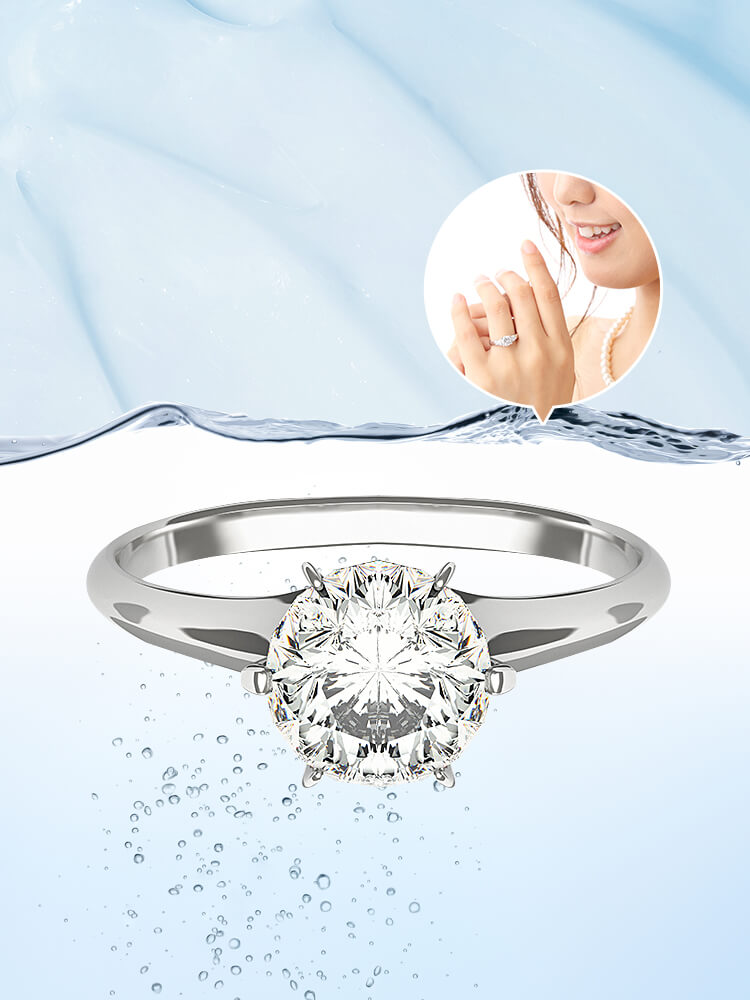
A diamond ring may look bright and brilliant when it is new, but even the most beautiful diamond slowly loses its radiance as it collects oils, lotions, dust, and tiny particles from daily life. Diamonds are magnets for grease; their surface structure naturally attracts oils from skin and hair. The more often a diamond ring is worn, the faster these residues settle into every corner of the setting. Even rings that are handled gently build up a thin film that dulls the stone’s sparkle over time.
Most people first notice the change when the diamond seems to lose some of its fire. Instead of sharp flashes of light, the stone begins to look slightly cloudy or muted. This is not because the diamond is changing; it is simply dirty. The area directly beneath the stone, especially the culet and pavilion, collects the most buildup. No matter how carefully someone washes their hands, debris works its way into the underside of the stone, where it lingers and absorbs light instead of reflecting it.
It becomes especially noticeable in rings with intricate designs. Pavé settings, halo rings, cathedral arches, tension settings, and vintage-inspired mountings contain dozens of small cavities where dirt accumulates. Micro-prongs can trap residue that brushing alone cannot remove. Even water-resistant soaps and sanitizers can leave behind films that slowly dull the stone’s brilliance. As a result, many diamond ring owners start searching for a deeper, more effective cleaning method than manual scrubbing.
This is where ultrasonic cleaners attract attention. These compact machines promise to clean jewelry using sound waves rather than friction, reaching places that toothbrushes and cloths cannot. The idea of placing a diamond ring into a tank, pressing a button, and watching it emerge sparkling again sounds almost magical. And in many cases, ultrasonic cleaners genuinely deliver on that promise.
Yet the question remains: Is an ultrasonic cleaner safe for a diamond ring? Diamonds are known as the hardest natural material on Earth, which leads many people to assume they can withstand anything. But hardness is not the same as toughness, and diamonds are not indestructible. Their durability depends on internal structure, clarity characteristics, treatments, and the condition of their mounting. What seems like a harmless cleaning method can become risky if these factors are not considered.
A diamond ring is more than just the diamond. It includes metal prongs, soldered joints, tiny accent stones, and sometimes adhesives. Every component reacts differently to ultrasonic vibration. Understanding how ultrasonic cleaners work and how diamond rings respond to them helps clarify when they are a safe choice—and when they may cause problems.
Before evaluating whether a diamond ring belongs inside an ultrasonic cleaner, it helps to understand the cleaning technology itself.
How Ultrasonic Cleaners Work
Ultrasonic cleaners rely on a simple idea, but the process happening inside the tank is surprisingly powerful. When you turn on an ultrasonic cleaner, it sends high-frequency sound waves through the water. These sound waves create rapid pressure changes that produce countless microscopic bubbles. The bubbles appear and disappear so quickly that they collapse almost as soon as they form. This process is called cavitation, and it is the key to ultrasonic cleaning.
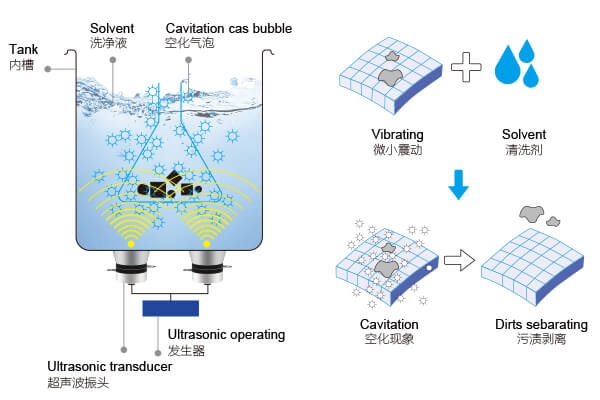
When a bubble collapses near the surface of a piece of jewelry, it releases a burst of energy. This energy acts like a tiny scrubbing motion, brushing away oils, grime, lotion residue, and particles that cling to the metal and gemstone surfaces. The bubbles form everywhere within the tank, which means they reach the underside of stones, the gaps between prongs, and the spaces deep inside detailed settings. This is where brushes and cloths struggle the most, especially in pieces with intricate designs such as pavé halos or multi-stone settings.
Another advantage of ultrasonic cleaning is its ability to dislodge debris without physical pressure. Traditional cleaning methods rely on friction—using a brush to scrub the setting or wiping a cloth across a stone. While effective, these methods cannot penetrate hidden areas, and they may leave behind particles trapped beneath prongs or under the pavilion of a diamond. Cavitation, on the other hand, travels through water and cleaning solution effortlessly. The vibrations loosen dirt in areas that even professionals sometimes have difficulty reaching manually.
The cleaning solution inside the tank influences the process as well. Water alone can transmit ultrasonic waves but cannot break down oils efficiently. This is why most people add a mild jewelry-safe cleaning solution containing surfactants or detergents. These help dissolve oils and lift residue from both the diamond and the metal. When combined with ultrasonic vibration, the solution removes surface contamination much more effectively than either method could achieve on its own.
Temperature also plays a role. Warm water helps dissolve oils and increases the efficiency of cavitation. Many ultrasonic cleaners include a heating function to maintain a comfortable operating temperature. However, the water must not become too hot, especially when cleaning jewelry containing multiple materials. Excessive heat can loosen glues, weaken solder joints, or stress certain types of stones.
Even though diamonds themselves can handle heat and vibration fairly well, not every part of a diamond ring is equally durable. The metal setting may expand slightly in warm water, and prongs holding the diamond in place could loosen if they were already weakened. This is why professionals always inspect jewelry before placing it in an ultrasonic cleaner. The technology itself is not inherently harmful, but it can reveal and amplify existing vulnerabilities.
The intensity of an ultrasonic cleaner depends on its frequency and power. Lower frequencies produce larger cavitation bubbles, which create stronger cleaning action but also more forceful impacts. Higher frequencies generate smaller bubbles, producing gentler cleaning that is ideal for delicate pieces. Most consumer-grade ultrasonic cleaners operate around 40 kHz, striking a balance between effective cleaning and safe operation for most jewelry.
When used properly, ultrasonic cleaners can make a diamond shine like new. They are excellent for removing sunscreen buildup, lotion residue, soap film, and even tiny particles that accumulate in the setting over months or years of wear. However, even though the technology works extremely well on diamonds, the real question is whether it is always safe.
The answer depends on the diamond, the ring design, and the condition of the setting. To understand whether a diamond ring belongs in an ultrasonic cleaner, we must examine the circumstances under which the method is beneficial and when it becomes risky.
Can You Put a Diamond Ring in an Ultrasonic Cleaner
The short answer is yes, you can put a diamond ring in an ultrasonic cleaner, but only under the right conditions. Diamonds are famously durable and resist scratching better than any other natural material. Their hardness makes them ideal candidates for ultrasonic cleaning because the vibration and cavitation inside the tank do not harm the diamond itself. When the stone is structurally sound and the ring is well made, ultrasonic cleaning can restore the diamond’s brilliance quickly and effectively.
However, the decision is not as simple as evaluating the diamond alone. A diamond ring is a combination of materials: the diamond, the metal setting, any additional gemstones, solder joints, and sometimes adhesives. Ultrasonic vibration affects all these components differently. While the diamond may be completely safe, the same cannot always be said for the rest of the ring.
For a clean, structurally sound diamond ring, an ultrasonic cleaner can dramatically improve the sparkle. The vibrations dislodge debris from behind the stone and around the setting, where oils tend to accumulate. Rings worn daily, especially engagement rings, often collect layers of residue that manual brushing cannot reach. An ultrasonic cleaner removes this buildup in minutes, revealing a diamond that looks almost freshly polished.
But complications arise when the diamond contains internal features known as inclusions. These natural characteristics form during the diamond’s creation and can vary from minor crystals to feather-like fractures. While inclusions do not necessarily weaken a diamond, some types—especially feather fractures—can be sensitive to sudden pressure changes. Ultrasonic cleaning creates rapid cycles of pressure inside the tank, and in rare cases, this can cause a fragile inclusion to expand or propagate. A diamond with significant internal fractures may be at risk even though its surface is completely intact.
Clarity-enhanced diamonds pose an even bigger risk. Some diamonds are treated to improve their appearance, either through fracture filling or laser drilling. Fracture-filled diamonds contain injected materials that make cracks less visible. These fillings are not always stable under heat or vibration, and ultrasonic cleaning may cause the filling to leak out or appear cloudy. Laser-drilled diamonds contain microscopic channels created to remove dark inclusions. These channels can widen or weaken under ultrasonic vibration.
The setting also plays a major role in whether a diamond ring is safe in an ultrasonic cleaner. Even a flawless diamond becomes vulnerable if the metal prongs, shoulders, or basket structure holding it are compromised. Rings worn for many years may develop wear on the prongs from constant friction. When prongs become thin or loose, ultrasonic cleaning can make the instability more obvious. A stone that was barely secure before may shake loose in the tank.
This is why jewelers often perform a quick inspection before placing any ring into an ultrasonic cleaner. They check for movement in the stone, visible gaps in the prongs, cracks in the metal, or signs of wear. If anything appears weak, they will clean the ring manually or tighten the setting first. A ring with a perfectly secure mounting handles ultrasonic vibration without issue, but a ring with hidden wear may not.
Many people assume that if the diamond is real, the ultrasonic cleaner is universally safe. In reality, the stone’s condition, its clarity features, the integrity of its mounting, and the surrounding gemstones all influence whether ultrasonic cleaning is appropriate. Some diamond rings, especially those with modern, well-constructed settings and high-quality stones, respond beautifully to ultrasonic cleaning. Others require gentler methods to avoid unnecessary risks.
Understanding these nuances is the key to making a smart cleaning decision. To evaluate a diamond ring properly, you must first understand the stone’s internal properties and how they interact with vibration.
Understanding Diamond Structure and Why It Matters
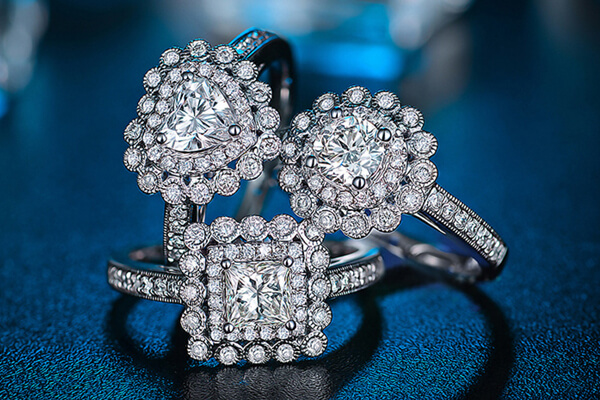
A diamond may be the hardest natural material on Earth, but hardness is only one part of its overall durability. When evaluating whether a diamond ring belongs in an ultrasonic cleaner, the internal structure of the stone plays a major role. Diamonds vary greatly in their clarity characteristics, growth patterns, and structural features. These differences influence how the stone reacts to vibration.
Hardness refers to a material’s resistance to scratching. Because diamonds rank at the top of the Mohs scale, they do not scratch easily, and their surfaces remain intact through normal wear. But toughness—the ability to resist chipping or fracturing—is a separate property. Diamonds are hard but not indestructible. In fact, their crystal structure makes them vulnerable in specific directions. A sharp impact at the wrong angle can chip a diamond, and internal fractures can expand under stress.
Inside every diamond are natural features known as inclusions. Some are benign and do not influence the stone’s strength. Others, such as feather inclusions, internal cracks, or cleavages, can create weak points. A feather is a thin fracture within the diamond that often looks like a cloudy, wispy line when viewed under magnification. While most feathers are stable and pose no issue during daily wear, they may react differently to the pressure cycles inside an ultrasonic cleaner.
Cavitation inside an ultrasonic tank generates rapid bursts of energy. These pressure fluctuations act like tiny waves hitting the surfaces and edges of materials. In a diamond with a delicate or surface-reaching feather, these pressure changes may stress the weak point. Even if a major fracture does not occur, the feather might expand slightly or become more visible. This is why jewelers sometimes avoid ultrasonic cleaners when working with lower-clarity diamonds that contain potentially unstable inclusions.
Another category of diamonds requires even more caution: clarity-enhanced diamonds. These stones undergo treatments to improve their appearance. The two most common treatments are:
- Fracture filling
A resin-like material is injected into internal fractures to make them less visible. This filler is vulnerable to heat and vibration. Ultrasonic cleaning can loosen or remove it, resulting in cloudy patches or visible lines. - Laser drilling
A laser creates a microscopic channel to remove dark inclusions. These channels can widen when exposed to ultrasonic vibration, especially if the stone already contains multiple drill paths.
Both treatments can make a diamond appear cleaner than it naturally is, but both introduce weaknesses. Jewelers often avoid ultrasonic cleaning for clarity-enhanced stones because the treatments are not stable under rapid pressure changes.
Even untreated diamonds can respond differently depending on how they were cut. The cut of a diamond includes angles and proportions that influence how light travels through the stone. But the cut also reveals or conceals internal features. A diamond with an inclusion near the girdle (the outer edge) may be more vulnerable than one with inclusions deeper within the pavilion. If a feather reaches the surface near a prong, vibration may cause the prong’s pressure to interact with the weak point.
The mounting itself adds another layer of complexity. If a diamond is held in a tension setting, the metal applies constant pressure to both sides of the stone. Ultrasonic vibration does not generate enough force to unsettle a secure tension setting, but if the diamond contains a vulnerable inclusion at the pressure point, the combination may increase stress. Similarly, four-prong and six-prong mountings distribute pressure differently, and the diamond’s internal structure determines how that pressure is absorbed.
Diamonds in vintage rings often require special consideration. Older stones cut decades ago may contain natural feathers, naturals near the girdle, or visible inclusions that were considered acceptable at the time of cutting. These features may be stable under normal wear but respond unpredictably to ultrasonic vibration. Antique mountings may also have worn prongs, increasing the risk of a stone shifting.
Understanding all these variables helps explain why some diamond rings are perfectly safe in ultrasonic cleaners while others require gentler care. The diamond itself is strong, but its internal landscape determines how well it handles vibration.
The next step is to identify the situations where ultrasonic cleaning performs exceptionally well—and why it is such a popular method for maintaining diamond brilliance.
When Ultrasonic Cleaning Works Very Well for Diamond Rings
Ultrasonic cleaners are exceptionally effective for certain types of diamond rings, and when the conditions are right, the transformation is remarkable. Many people are stunned to see how much brighter a diamond appears after just a few minutes in the ultrasonic tank. The technology targets the most stubborn buildup—grime, lotion residue, oil films, sunscreen particles, and everyday debris—that collects in the smallest crevices of a ring. When these contaminants vanish, the diamond’s brilliance returns instantly.
-
 Household
UV Ultrasonic Cleaner – 360° Deep Cleaning for Dentures, Jewelry & Household Use, with UV Light & 48kHz Frequency, 3 Modes
ClearGC01MGC01UGC01BMGC01BU -
-
-

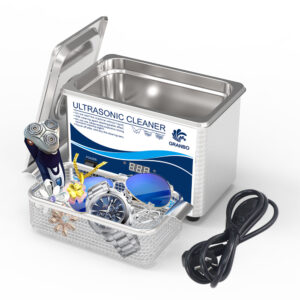
One of the reasons ultrasonic cleaning works so well is that diamonds show dirt clearly. Because a diamond is designed to reflect light, anything that obstructs light entering the stone reduces its sparkle. Residue accumulates mainly underneath the stone, where it is nearly impossible to reach manually. Cavitation makes direct contact with the pavilion and culet areas, removing buildup that conventional brushing leaves behind. As a result, the diamond reflects light more freely, restoring the crisp brilliance that initially made it so appealing.
Rings with complex designs benefit greatly from ultrasonic cleaning. Pavé bands, halo mountings, cathedral styles, and vintage-inspired rings contain dozens of tiny corners where dirt settles. Micro-prong settings and three-stone or five-stone rings collect residue between each stone. Cleaning this type of jewelry manually is tedious and rarely perfect. Ultrasonic cleaners reach into these hidden spaces easily, leaving even the most intricate pieces refreshed.
Daily-wear diamond rings show the most dramatic improvement. People who wear their engagement or wedding rings constantly often expose them to soaps, hand creams, shampoo, hair products, and natural skin oils. These substances gradually create a sticky layer around the stone and setting. Even washing hands can make the problem worse, because soap residue dries on the ring’s underside. Ultrasonic vibration breaks apart these stubborn films, revealing the diamond’s natural brightness almost instantly.
White gold and platinum settings also benefit from ultrasonic cleaning. These metals tend to develop a dull surface appearance when coated with oils or lotion buildup. The ultrasonic process restores their metallic shine without abrasive brushing. For rings with filigree or milgrain detailing, ultrasonic cleaning removes debris trapped in the decorative patterns, making the details look sharper and more defined.
Diamond eternity bands and channel-set rings respond beautifully to ultrasonic cleaning. These designs expose multiple edges and corners that attract dirt. Because diamonds in these styles sit very close to one another, oil buildup between stones can make the entire band look flat or washed out. After ultrasonic cleaning, each diamond appears individually reflective again, restoring the band’s overall brilliance.
Custom rings, especially those with intricate under-galleries or delicate scrollwork, also show dramatic improvement. The underside of a ring collects a surprising amount of debris from sweat, lotions, and environmental exposure. Ultrasonic cleaners penetrate these deep spaces, producing results that cannot be achieved through surface cleaning alone.
Another advantage of ultrasonic cleaning is its efficiency. A diamond ring that looks dull after months of daily wear can become radiant again in just a few minutes. This makes ultrasonic cleaning an appealing option for people who want fast, professional-level results at home. Jewelers rely on ultrasonic cleaners for this reason—they need to restore brilliance quickly, especially when preparing a piece for customer pickup.
When the diamond is structurally sound, the mounting is secure, and the ring contains no sensitive gemstones, ultrasonic cleaning performs exceptionally well. It is the closest thing to a professional deep-cleaning method available for home use, offering results that manual cleaning simply cannot match.
But while ultrasonic cleaning excels in many scenarios, there are also situations where it is not advisable—even for diamonds. Understanding the risks is essential before deciding whether to place a ring into the ultrasonic tank.
Risks and Situations Where You Should Avoid Ultrasonic Cleaning
Although ultrasonic cleaners are excellent at restoring a diamond’s sparkle, there are important situations where they should not be used. The diamond itself may be tough enough to handle cavitation, but the ring’s overall structure, clarity characteristics, and accompanying gemstones influence whether ultrasonic cleaning is safe. Ignoring these factors can lead to unexpected damage, loosened stones, or visible changes in the diamond’s appearance.
One of the biggest risks involves diamonds with internal fractures or feathers. These inclusions may be stable during everyday wear, but they weaken the diamond’s internal structure. Ultrasonic cleaners create cycles of pressure inside the water, and if a feather is located near the surface or along a cleavage plane, these pressure fluctuations may expand the fracture. While catastrophic breakage is rare, the inclusion can grow or become more noticeable. Diamonds with clarity grades that include obvious feathers, especially those reaching the surface, should not be cleaned ultrasonically.
Another major concern is clarity-enhanced diamonds, particularly fracture-filled stones. During enhancement, a filler material is injected into fractures to conceal them. This filler is not chemically identical to diamond, and it cannot withstand ultrasonic vibration in the same way. Cavitation may cause the filler to leak, bubble, or turn cloudy, leaving streaks or white lines inside the diamond. In some cases, the filling completely dislodges, revealing the crack that was originally hidden. Laser-drilled diamonds face different risks; the microscopic channels created during drilling can widen slightly under ultrasonic pressure, especially if they intersect natural feathers.
The condition of the ring’s setting also determines its suitability for ultrasonic cleaning. Over time, metal prongs become worn, bent, or thinned from routine contact with clothing, household surfaces, or other jewelry. A prong weakened by years of wear may hold a stone securely enough for daily activities but become vulnerable when the ring enters an ultrasonic cleaner. The constant vibration can expose the looseness, causing the diamond to shift or even fall out. This is why jewelers always perform a setting check before placing a customer’s ring into the tank. Rings with loose prongs, worn metal, or old solder joints should be cleaned manually until repairs are made.
Vintage diamond rings present additional risks. Older mountings are more likely to contain weakened areas, fragile filigree, or metal fatigue from decades of use. Even if the diamond is high quality, the setting may not withstand ultrasonic vibration. Antique rings often have hand-cut stones with different facet proportions compared to modern diamonds. These stones sometimes contain natural inclusions that reflect the geological conditions of their formation. While these inclusions give antique diamonds character, they may make them less suitable for ultrasonic cleaning.
Rings that combine diamonds with soft or porous gemstones should be kept out of ultrasonic cleaners entirely. Many popular ring designs incorporate multiple stones. Even if the central diamond is completely safe, surrounding stones may not be. The following gems should never be exposed to ultrasonic vibration:
- Opal
- Emerald
- Tanzanite
- Pearl
- Coral
- Amber
- Turquoise
- Lapis lazuli
- Malachite
- Moonstone
- Onyx
- Any stone filled, dyed, glued, or stabilized
If a diamond ring includes any of these stones, ultrasonic cleaning becomes risky because the weaker gem can crack, discolor, or detach. The ultrasonic tank applies energy evenly throughout the water, meaning every stone in the ring receives the same vibration.
Even diamonds set in multi-stone bands can be at risk if the ring uses pavé or micro-pavé settings. These designs rely on tiny beads of metal to hold each stone in place. Over time, these beads can wear down or loosen. Ultrasonic cleaning may dislodge one or more stones—not because the machine is harmful, but because the stones were already unstable. Once a bead breaks, the stone can shift or fall into the bottom of the tank.
Temperature also contributes to potential risks. The water in an ultrasonic cleaner typically warms up during operation. While diamonds tolerate heat well, other materials in the ring might not. Glues used in inexpensive jewelry soften when heated. Even some high-end rings contain glued components, such as decorative accents or small inlays. Ultrasonic vibration combined with heat accelerates adhesive failure.
Rings with hollow or lightweight construction require caution as well. Some modern designs use hollow metal to keep rings comfortable and affordable. Ultrasonic vibration can cause the thin walls of hollow rings to flex, potentially creating dents or structural distortion.
Finally, ultrasonic cleaners can sometimes reveal aesthetic issues rather than create them. For example, if a ring has accumulated dirt for years, that buildup may hide small scratches, uneven polishing, or inconsistencies in the metal. After ultrasonic cleaning removes the debris, these imperfections become more visible. While not technically damage, the change in appearance can surprise someone expecting a flawless result.
Knowing when ultrasonic cleaning is safe—and when it is not—helps protect both your diamond and the structure of the ring itself. But safety also depends on the other gemstones present in the ring, which leads to the next essential consideration.
Diamond Rings with Other Gemstones: What’s Safe and What Isn’t
Many diamond rings include more than just a diamond. Whether it is a halo of accent stones, side stones, birthstones, or decorative inlays, the presence of additional gemstones significantly influences whether ultrasonic cleaning is safe. Even though diamonds themselves usually tolerate ultrasonic vibration, many of the stones commonly paired with them do not. Understanding these differences is essential before placing a mixed-stone ring into an ultrasonic cleaner.
The safest companions for diamonds in an ultrasonic cleaner are rubies and sapphires, which belong to the corundum family. Corundum is very hard and durable, making it suitable for ultrasonic cleaners when the stones are untreated. Natural and high-quality rubies and sapphires typically withstand cavitation very well. However, heat-treated stones are generally safe too. The problem arises when corundum has been fracture-filled or glass-filled, a common treatment to improve clarity. These fillers are extremely sensitive to ultrasonic vibration and can leak or discolor, leaving the stone looking damaged.
Diamonds paired with cubic zirconia or moissanite are generally safe, provided these stones are securely mounted. Both are durable and can handle ultrasonic cleaning, though moissanite occasionally reflects vibration differently because of its crystal structure. The metal setting and mounting stability matter more in these cases than the stones themselves.
However, many mixed-stone rings contain gems that are not suitable for ultrasonic cleaning under any circumstances. Stones with internal fractures, porous surfaces, or water content respond poorly to rapid pressure changes. For example, emeralds almost always contain natural inclusions and are frequently treated with oils or resins to improve clarity. Ultrasonic cleaners can remove these fillers and cause the stone to appear cloudy or cracked.
Opals are similarly vulnerable because they contain internal water and have a delicate structure. Even slight temperature changes can fracture an opal, and ultrasonic vibration accelerates this risk. Putting an opal in an ultrasonic cleaner—especially when mounted next to a diamond—poses a significant danger.
Other stones that should never enter an ultrasonic cleaner include:
- Turquoise
- Pearl
- Coral
- Amber
- Lapis lazuli
- Malachite
- Moonstone
- Onyx (especially dyed varieties)
- Jade and jadeite (depending on treatment)
- Any gem stabilized with resin or polymer
- Any glass-filled, dyed, or fracture-filled stone
Many of these stones are porous, meaning they can absorb cleaning solution or develop surface damage from vibration. Others are brittle or contain layered structures that separate under ultrasonic stress.
Composite stones present another challenge. These stones are constructed by bonding two or more materials together, often using adhesives. Doublets and triplets, which are common in opal and emerald jewelry, contain glue layers that can weaken or separate when exposed to heat and vibration. Even if the diamond itself is perfectly safe, the companion stones can fail.
Halo rings and pavé designs deserve extra attention. These rings often combine a central diamond with many small accent diamonds or gemstones. While diamonds are generally safe, the tiny stones surrounding them may be glued or set with minimal metal. If even one stone is fragile, the entire ring becomes unsafe for ultrasonic cleaning. A single weakened bead or prong can cause a small gemstone to loosen and fall into the bottom of the tank.
Even certain types of colored diamonds require caution. For example, some treated blue diamonds are color-enhanced by irradiation or heat processes that may not respond well to ultrasonic cleaning. Fancy-colored diamonds that are naturally colored are safe, but treated stones can behave unpredictably.
If you are unsure about the type of stones in a ring, examining the piece under magnification or consulting a jeweler helps clarify whether ultrasonic cleaning is appropriate. Many mixed-stone rings look safe at first glance because the central diamond is durable, but the smaller or decorative stones often determine the cleaning method.
Knowing which gemstones are safe and which are not helps protect your ring from avoidable damage. The next important step is selecting the right cleaning solution to maximize safety and effectiveness when using an ultrasonic cleaner for diamond rings.
Choosing the Right Ultrasonic Cleaning Solution for Diamond Rings
An ultrasonic cleaner is only as effective as the solution inside it. Water alone can transmit ultrasonic waves, but it cannot break down oils or dissolve the grime that dulls a diamond’s brilliance. The right cleaning solution enhances cavitation, improves cleaning power, and protects the metal setting from chemical reactions that could cause discoloration. Just as importantly, the wrong solution can damage a ring or leave behind residues that reduce sparkle instead of restoring it.
The safest choice is a jewelry-specific ultrasonic cleaning solution. These solutions are formulated to be gentle on metals and diamonds while still powerful enough to dissolve lotions, oils, soap films, and other debris. They typically contain surfactants, mild detergents, and stabilizers that work together to enhance ultrasonic cavitation. These additives help the solution flow into tight crevices, reaching the backside of the diamond where most buildup occurs.
A good jewelry cleaning solution should be free of harsh chemicals like ammonia, chlorine, or strong acids. These substances can weaken gold alloys or cause discoloration. Although diamonds themselves tolerate chemicals well, the metal holding them does not. White gold is especially sensitive to harsh cleaning agents because it may contain nickel or other alloys that react with chemical residues. If the solution is incompatible with gold or platinum, the ring may appear duller after cleaning.
Some consumer solutions contain ammonia in low concentrations, and while ammonia is generally safe for diamonds, it can react with certain metal alloys or solder joints. Jewelers often avoid ammonia-based solutions in ultrasonic cleaners because ultrasonic vibration intensifies the chemical activity. Even if a ring handles ammonia during manual cleaning, combining ammonia with cavitation may produce unwanted discoloration or stress on the metal.
Temperature also affects cleaning performance. Most jewelry solutions perform best between 30°C and 50°C, though diamond rings generally clean well at temperatures closer to the lower end of that range. Warmer water helps dissolve oily residues more quickly, but excessive heat can stress delicate settings or affect stones that surround the diamond. Even if the diamond itself is safe, small accent stones or glue layers in a ring may not tolerate prolonged exposure to heat.
For this reason, jewelry-safe solutions often include corrosion inhibitors or anti-foaming agents. Foam disrupts cavitation by absorbing ultrasonic waves, reducing cleaning efficiency. A well-formulated solution keeps foam to a minimum, ensuring that the cavitation bubbles reach all surfaces of the ring. These specialized additives help create a stable environment inside the tank that allows ultrasonic cleaning to work effectively.
Homemade solutions, such as mixtures of dish soap and water, are popular but not ideal. While a mild dish soap may remove some surface debris, it produces foam easily, which weakens cavitation. Thick or scented dish soaps often leave residues that dull diamonds instead of brightening them. Vinegar and baking soda mixtures are also unsuitable because they do not dissolve effectively in an ultrasonic tank, and the mild chemical reaction they produce does not benefit cavitation.
A solution that is too strong is just as problematic as one that is too weak. Highly concentrated cleaners meant for industrial use may be too aggressive for jewelry, stripping protective rhodium plating from white gold or etching soft metals. Strong solutions can also interfere with prong stability over time, especially in rings worn daily.
Choosing the right solution ultimately comes down to balance: powerful enough to remove oils and grime, but gentle enough to protect metals, mountings, and any accompanying stones. When paired with the right dilution ratio and operating temperature, a jewelry-safe ultrasonic cleaner solution becomes a reliable way to maintain a diamond’s brilliance.
With the proper solution chosen, the next step is learning how to safely and thoroughly clean a diamond ring using an ultrasonic cleaner.
Step-by-Step Guide to Safely Cleaning a Diamond Ring Ultrasonically
When used correctly, an ultrasonic cleaner can make a diamond ring look as radiant as the day it was purchased. The key is to follow a careful process that protects the stone, the metal, and the setting while maximizing cleaning effectiveness. The following steps describe a safe, natural workflow that jewelers commonly use, adapted for both home and professional environments.
Before placing a diamond ring in an ultrasonic cleaner, examine the ring carefully. Look for loose stones, bent prongs, worn metal, or any visible gaps in the setting. Hold the ring near your ear and gently tap it; if you hear a faint rattle, the stone may be loose. This is a sign that ultrasonic cleaning should be avoided until a jeweler secures the setting. Even a small amount of movement can cause a diamond to shift inside the tank, making the problem worse.
Once you confirm the ring is structurally sound, prepare the ultrasonic tank. Fill it with clean, warm water and add the appropriate amount of jewelry-safe cleaning solution. Mix gently to avoid creating foam, which disrupts cavitation. If your cleaner has a heating option, allow the water to reach a comfortable temperature—warm enough to help dissolve oils but not so hot that the metal becomes stressed. Keeping the temperature moderate protects both the stone and the mounting.
Place the diamond ring in a basket or jewelry holder rather than directly on the tank’s metal floor. Direct contact with the floor creates vibration hotspots that may scratch the metal. A basket keeps the ring suspended in the solution, allowing the cavitation bubbles to circulate freely around it. Make sure the ring does not touch other pieces of jewelry in the basket; collisions during vibration can cause scratches or loosen stones.
Activate the ultrasonic cleaner and select a short cleaning cycle. Most diamond rings respond well to cycles between three and five minutes. It is better to start with a short duration and assess the results than to leave the ring in for too long. Ultrasonic cleaners work quickly, and extended cycles do not necessarily produce better outcomes. If the ring is very dirty, you can repeat the cycle after inspecting it.
During the cleaning process, you may notice the water shimmering or moving slightly. This is a sign that cavitation is occurring properly. If excessive foam develops, stop the machine and reduce the concentration of the cleaning solution. Foam absorbs ultrasonic energy and reduces cleaning effectiveness.
After the cycle finishes, remove the basket and rinse the ring under clean, lukewarm water. Rinsing eliminates any residual cleaning solution and prevents streaks or film from drying on the metal surface. Take your time with this step; properly rinsed jewelry always looks brighter than pieces rushed through this stage.
Next, inspect the diamond under good lighting. The stone should appear noticeably brighter, with improved clarity and sparkle. Hold it at different angles to assess whether the cleaning solution reached the underside of the stone. If the ring still looks dull beneath the pavilion, another short cycle may help. Avoid back-to-back long cycles, which can unnecessarily stress the setting.
Dry the ring thoroughly using a soft, lint-free cloth. Patting is more effective than rubbing for preventing micro-scratches, especially on high-polish gold. For intricate rings with filigree or pavé work, use a hairdryer on a cool setting to remove moisture from hidden spaces. Leaving moisture behind can lead to mineral spots or encourage tarnish on white gold alloys.
If you notice that the diamond still lacks brilliance, the issue may not be dirt but rather tiny scratches on the metal or wear on the prongs. Ultrasonic cleaning cannot repair these. A jeweler’s polishing and rhodium plating services may be needed to restore the ring’s full shine.
Once the ring is fully dry, store it in a soft pouch or jewelry box compartment that minimizes friction with other items. Proper storage prolongs the results of ultrasonic cleaning and prevents buildup from returning too quickly.
Using an ultrasonic cleaner correctly can make maintenance effortless, but professionals use additional judgment based on experience. Understanding why jewelers sometimes avoid ultrasonic cleaning helps deepen your knowledge of when this method is appropriate.
When Professional Jewelers Use Ultrasonic Cleaners—and When They Don’t
Professional jewelers rely on ultrasonic cleaners almost every day, but they use them with a level of caution and insight that comes only from experience. Their decisions are shaped not only by the durability of diamonds but also by the construction of the ring, the stability of the setting, and the long-term condition of the metals. Observing how jewelers use ultrasonic cleaners provides valuable guidance for ring owners who want to make informed decisions at home.
In a jewelry workshop, ultrasonic cleaners play an important role in pre-polishing and post-repair cleaning. Before polishing a ring on a buffing wheel, jewelers often place it in an ultrasonic tank to remove oils, sweat, lotion residue, and dust. These contaminants interfere with polishing compounds, so removing them first guarantees a cleaner, sharper result. After polishing, jewelers return the ring to the ultrasonic cleaner to wash away excess buffing compound that collects in prongs, open galleries, and engraved patterns. This multi-step approach ensures the finish remains smooth and professional.
Jewelers also use ultrasonic cleaning to restore brilliance before customer pickup. When a customer brings in a ring for inspection or servicing, the jeweler often gives it a quick ultrasonic cleaning to refresh the diamond’s sparkle. Even a few minutes in the tank can dramatically improve the ring’s appearance, making the stone look brighter and more lively. This service is simple but effective, and customers appreciate the transformation.
However, jewelers are also quick to avoid ultrasonic cleaning when they see potential issues. For example, if a diamond ring shows signs of worn prongs or loose stones, an ultrasonic cleaner becomes risky. The vibration may cause the stone to shift, exposing a problem the owner may not have noticed. Instead of cleaning it ultrasonically, the jeweler will tighten the prongs or repair the setting first.
Jewelers also avoid ultrasonic cleaners for fracture-filled, laser-drilled, or clarity-enhanced diamonds. These treatments can be damaged or reversed by ultrasonic vibration, so jewelers clean such stones manually. Professionals can identify treated diamonds more easily because they recognize the visual cues: flash effects, surface-reaching fractures, or subtle color irregularities. This trained eye helps them avoid mistakes that a nonprofessional might unknowingly make.
When rings contain multiple gemstones, jewelers evaluate each stone individually. A diamond might be completely safe, but a nearby emerald, opal, or turquoise could be destroyed in an ultrasonic tank. For multi-stone rings, jewelers often rely on steam cleaning or gentle brushing instead. Their goal is to protect every stone, not just the diamond.
Another reason jewelers exercise caution is the condition of vintage or antique rings. Older rings frequently contain hand-cut diamonds, worn settings, or fragile filigree. Even if the diamond itself is structurally sound, the setting may not withstand ultrasonic vibration. For these pieces, jewelers prefer manual cleaning methods that allow them to avoid stressing delicate components.
Ultrasonic cleaners are also used strategically as diagnostic tools. A jeweler may place a ring in the ultrasonic tank for a short cycle to observe whether any stones loosen. If one does, it indicates that the setting needs repair. This controlled environment allows the jeweler to identify weaknesses before the customer loses a stone during everyday wear.
On the other hand, jewelers frequently use ultrasonic cleaning for modern solitaire rings, three-stone designs with sturdy settings, and well-made pavé bands—as long as the stones are secure. Modern settings are often engineered precisely, with prongs and channels designed to withstand daily stress. For these rings, ultrasonic cleaning is a fast, reliable way to maintain brilliance.
Professional jewelers understand that ultrasonic cleaners are tools, not universal solutions. They are incredibly effective when used wisely and risky when used without proper judgment. Their experience reinforces the idea that ultrasonic cleaning should always be a decision, not a habit.
With this professional insight in mind, it becomes easier to compare ultrasonic cleaning methods with the other cleaning techniques available for diamond rings.
Comparing Ultrasonic Cleaning to Other Diamond Cleaning Methods
Ultrasonic cleaning is often considered one of the most effective ways to restore a diamond ring’s brilliance, but it is not the only method available. Each cleaning approach has strengths, limitations, and ideal use cases. Understanding how these methods compare helps clarify when ultrasonic cleaning is the best choice and when other techniques may be safer or more practical.
A common alternative to ultrasonic cleaning is manual brushing. Most people use a soft toothbrush paired with warm water and mild dish soap. This method can remove surface grime effectively, especially on the crown of the diamond. It also offers full control—no vibration, no risk to delicate settings, and no exposure to heat. However, brushing cannot reach deep under the stone, especially in mountings with enclosed galleries, tight pavé designs, or rings with multiple tiny stones. Manual cleaning is gentle but limited, and diamonds with heavy buildup may look only slightly improved.
Steam cleaning is another professional method. Jewelry steamers release bursts of high-pressure steam that blow away dirt and oil. Steam cleaning produces a bright shine on diamonds and metals without using chemicals or vibration. Jewelers often use steam after ultrasonic cleaning to remove any remaining residue. However, steam alone does not dissolve oils as effectively as ultrasonic cavitation, and it cannot loosen debris embedded deep within intricate mountings. Steam is best used as a finishing step rather than a standalone method.
Many people use jewelry cleansing solutions at home—typically small containers with soaking trays and mild cleaning agents. These solutions are effective at breaking down lotion films and hand-soap residue. When combined with brief brushing, they can revive a diamond’s surface shine. But like manual brushing, soaking does not reach areas beneath the diamond or between small stones, and debris lodged deep within the setting may remain.
Jewelry wipes and polishing cloths help restore shine to metal bands, particularly gold or platinum. They are very effective for smoothing out fingerprints and surface dullness but do nothing for the diamond itself. Polishing cloths also cannot access tight crevices, and aggressively rubbing the metal may contribute to wear over time.
Professional polishing is a powerful way to restore brilliance, but it focuses primarily on the metal. A jeweler uses polishing compounds and buffing wheels to remove scratches and restore luster. While this method makes the ring look brand-new, it does not clean underneath the stone. Polishing often requires ultrasonic cleaning afterward to remove compounds embedded in the setting.
The baking soda and warm water paste method, popular in at-home cleaning guides, can remove some surface residue but is not ideal for diamond rings. Baking soda is abrasive, and although it seldom scratches diamonds, it may scratch metal bands or soft accent stones. It also leaves a fine residue that can settle into crevices if not thoroughly rinsed.
Another common at-home method is the mixture of ammonia and warm water. Ammonia can brighten diamonds effectively because it dissolves grease well. However, using ammonia requires caution, particularly with white gold rings that contain nickel or with rings featuring other gemstones. Ammonia can cause irritation if inhaled, and improper dilution can harm metal alloy components. For these reasons, many jewelers discourage ammonia use at home.
Compared to these alternatives, ultrasonic cleaning offers something unique: deep cleaning of the entire mounting, including areas that are impossible to reach with brushes or polishing cloths. Cavitation waves flow beneath the stone, inside the setting, and between prongs, loosening debris that would otherwise remain hidden. This makes ultrasonic cleaning especially effective for diamond rings that have accumulated months or years of oils, lotion build-up, or everyday grime.
However, ultrasonic cleaning’s power also introduces potential risks. Unlike manual brushing or soaking, ultrasonic vibration can stress weak mountings or sensitive stones. It is a more advanced method that requires judgment, which is why jewelers rely on it carefully.
When comparing all options, ultrasonic cleaning stands out as the best method for restoring full brilliance to a structurally sound diamond ring with durable settings and no vulnerable stones. But for rings with fragile components, gentle alternatives are safer.
Once your diamond ring is cleaned, you can extend its sparkle for longer by adopting a thoughtful maintenance routine. The next section focuses on how to preserve the brilliance and cleanliness of your ring between ultrasonic cycles.
Long-Term Care for Diamond Rings After Cleaning
A diamond ring always looks its best right after a thorough cleaning, especially when ultrasonic cleaning has removed the deep-seated residue that dulls brilliance. But keeping the ring bright, clear, and beautiful requires consistent care. The better the maintenance habits, the less frequently the ring needs intensive cleaning and the safer it will be during each cleaning cycle. Long-term care also protects the metal setting, which plays an essential role in keeping the diamond secure.
The first step in maintaining a diamond ring’s brilliance is adopting mindful daily wear habits. A diamond’s hardness allows it to endure contact with many surfaces, but the metal holding it is softer. Gold, platinum, and other alloys scratch or bend more easily than the diamond they support. Activities such as gardening, handling tools, lifting weights, or cleaning with abrasive products can leave scratches on the ring’s surface or weaken prongs. Removing the ring during high-contact tasks preserves both the shine and the structural integrity of the setting.
Exposure to cosmetics is another factor that affects long-term appearance. Lotions, sunscreen, hairspray, makeup, and oils cling to a diamond’s surface and migrate underneath the setting, forming a cloudy film that dulls sparkle. Applying these products before putting on your ring, rather than after, significantly reduces buildup. When the diamond encounters fewer sticky residues, its brilliance lasts longer between cleanings.
Proper storage also plays an important role. Diamond rings should be stored in a soft-lined jewelry box or individual pouch to avoid scratching other jewelry or becoming scratched by gemstones in nearby pieces. Even though diamonds do not scratch easily, they can scratch other stones and metals. Rings stored loosely in drawers or mixed with bracelets and earrings often develop unnecessary wear marks. Separate storage compartments maintain shine and prevent accidental damage.
Regular inspections are another essential part of long-term care. Over time, metal prongs can loosen or bend just slightly from everyday motions. Many people never notice these changes because the ring appears stable during normal wear. However, ultrasonic cleaning or even a minor bump can push a loosening prong past its limit. Inspecting the ring yourself—looking for gaps, misaligned prongs, or movement in the stone—helps identify issues early. Jewelers typically offer complimentary prong checks, and visiting a professional once or twice a year ensures that the setting remains strong.
Moisture is another common culprit that affects both shine and metal longevity. Water trapped under the stone or within filigree can leave mineral marks when it dries. After cleaning your ring, whether manually or ultrasonically, drying it thoroughly prevents water spots and corrosion. A soft, lint-free cloth works well, but for intricate rings, compressed air or a hairdryer set to cool removes moisture from tight spaces that cloths cannot reach.
Developing a gentle weekly cleaning routine also helps maintain clarity. A quick soak in warm water with a small amount of mild soap, followed by gentle brushing of the metal and underside of the diamond, prevents oils from building up. This light maintenance means the ring stays brighter, and deeper cleanings become less necessary. Rings maintained regularly respond far better to ultrasonic cleaning when the time comes, because the buildup never becomes severe.
For white gold rings in particular, long-term care includes monitoring the rhodium plating, which is applied to enhance shine and whiteness. Over time, rhodium wears down, especially on areas that contact skin or other surfaces. When rhodium fades, the metal beneath may appear slightly yellowish or dull. Jewelers can reapply rhodium plating to restore brightness, and performing this service periodically keeps the metal looking polished.
In addition, be cautious with household chemicals. Chlorine, bleach, and harsh cleaning agents can weaken gold alloys and cause micro-pits or stress fractures. Removing the ring when cleaning bathrooms, pools, or kitchens protects it from unnecessary chemical exposure. Even though diamonds themselves resist chemical damage, the metal holding them does not.
Traveling with a diamond ring introduces new considerations. Humidity, lotions, saltwater, and sand can all dull the diamond or scratch the setting. Keeping the ring in a protective pouch during beach activities or storing it safely during travel prevents exposure to abrasive environments.
By combining thoughtful wear habits, regular inspections, proper storage, and gentle maintenance cleanings, you can extend the brilliance of your diamond ring and reduce the frequency of intensive ultrasonic cleaning. When the time comes to use an ultrasonic cleaner again, the process becomes safer, more effective, and less stressful for the setting.
These long-term habits ultimately protect both the diamond’s beauty and the integrity of the ring for many years to come.
Final Thoughts: Should You Put a Diamond Ring in an Ultrasonic Cleaner
A diamond ring can look breathtaking after a session in an ultrasonic cleaner. When the stone is structurally sound, the setting is secure, and no delicate gemstones are part of the design, ultrasonic cleaning provides a level of clarity and sparkle that is difficult to achieve with other methods. The cavitation process lifts away oils, dirt, and residue that settle into the hardest-to-reach places, revealing the brilliance that makes diamonds so captivating.
But an ultrasonic cleaner is a tool that requires judgment. Not every diamond ring is a good candidate for ultrasonic cleaning, even though diamonds themselves are incredibly strong. The condition of the stone, the nature of its inclusions, the presence of clarity treatments, and the overall stability of the mounting determine whether the method is safe. Rings that incorporate fragile gemstones, older solder joints, hollow metal structures, or micro-pavé patterns may require gentler techniques to avoid loosening stones or stressing the setting.
What matters most is evaluating each ring individually. When a diamond ring is carefully inspected, matched with the right cleaning solution, and placed in the ultrasonic cleaner for an appropriate duration, the results can be spectacular. The brilliance returns, the metal looks more polished, and the ring regains much of the beauty it had when first worn. But when a ring contains vulnerabilities—whether in the diamond, the metal, or surrounding gemstones—manual cleaning is the smarter and safer choice.
Ultrasonic cleaners are neither universally safe nor inherently dangerous. They are simply powerful devices that perform exceptionally well when used thoughtfully. The more you understand your diamond ring—its structure, its setting, and its unique characteristics—the easier it becomes to decide which cleaning method will preserve its beauty for years to come.
With proper care, thoughtful habits, and occasional professional inspection, your diamond ring can remain a radiant symbol of clarity and strength. And whether you choose ultrasonic cleaning or a gentler method, informed decisions ensure that the sparkle you see today continues far into the future.